Hiển thị các bài đăng có nhãn Cat. Hiển thị tất cả bài đăng

Thứ Năm, 5 tháng 8, 2010

Does My Cat Have Fleas?

0 nhận xét
The ordinary cat flea (Ctenocephalides felis) is the most common parasite on the cat’s skin. All cats can be affected except for those living at higher elevations, because fleas do not live above 5,000 feet. Cats living indoors can have fleas year-round.

Fleas survive by jumping onto a host animal, cutting open their skin, and feeding on the blood. In most cases, they cause only a mild itch; but a heavy infestation, especially of kittens or older, ill cats, might cause severe anemia or even the death of the cat. Fleas also are an intermediate host of tapeworm. Some cats experience hypersensitivity to flea saliva. This produces intense itching and a localized or generalized skin reaction.

Flea infestation can be diagnosed by finding fleas on the cat or by seeing black and white, salt-and-pepper-like grains in the coat. These particles are flea feces (the “pepper”) and flea eggs (the “salt”). Fecal material is made up of digested blood. When brushed onto a wet paper, it turns a reddish brown.

The adult flea is a small dark brown insect about 2.5 millimeters in size and can be seen with the naked eye. Although fleas have no wings and cannot fly, they do have powerful back legs and can jump great distances. Fleas move through the hair rapidly and are difficult to catch.

Look for fleas on your cat’s back and around the tail and hindquarters by running a fine-toothed comb through her fur. Fleas are sometimes seen in the groin area, where it is warm and there is less hair. Itching is most pronounced in these areas.

New Methods of Flea Control


New products such as Program, Advantage, and Frontline have practically replaced the use of dips, powders, sprays, and shampoos to treat and prevent fleas. The new products are more effective and safer than the traditional insecticides. They are also easier to administer.

Program (the brand name for lufenuron) was the first and remains one of the most popular agents for controlling fleas on cats. Program is a tablet or liquid given once a month with a meal. There is also an injectable form that is given every six months.

The active ingredient accumulates in the cat’s subcutaneous tissue and the flea must bite the cat for Program to work. Program works by inhibiting flea eggs from growing and hatching. This leads to a steady drop in the number of new fleas in the environment. Its effect is limited to the hard outer shell of the flea, making it completely harmless to mammals. However, because mature fleas are not affected, it can take 30 to 60 days or longer for the adult fleas on the cat to die of old age before you notice a reduction in itching and scratching. All pets in the household must be on Program for it to be effective.

Advantage (imidacloprid) is a once-a-month topical liquid that kills fleas by direct contact.

Following application, 98 to 100 percent of adult fleas are killed within 12 hours. Thus, any new fleas that infest the cat should be killed before they have a chance to lay eggs. This breaks the flea life cycle and eventually eliminates fleas in the environment. Advantage is not absorbed into the cat’s system, and therefore is nontoxic. Humans do not absorb the chemical after petting a treated cat. Advantage can be used on kittens 8 weeks and up.

Frontline and Frontline Spray contain the active ingredient fipronil, which kills fleas on contact within 24 to 48 hours. The fleas do not need to bite the cat to be killed. Frontline is a topical liquid that comes in tubes and is applied as described for Advantage.

Frontline Plus has S-methoprene, which is labeled to kill adult fleas, flea eggs, and larvae. It also treats chewing lice and is used as part of a program to control sarcoptic mange. Frontline Plus is labeled for kittens 8 weeks of age and up.

Revolution (selamectin), a heartworm preventive, is a once-a-month topical liquid that is applied to the skin of the cat’s neck between the shoulder blades, as described for Advantage. It also controls adult fleas and prevents flea eggs from hatching. Selamectin can also be used to control ear mites, roundworms, and hookworms, as well as some ticks.
  • Digg
  • Del.icio.us
  • StumbleUpon
  • Reddit
  • RSS

How to Choose Cat Litter

0 nhận xét
Your new cat is coming home from the animal shelter tomorrow. Busily you shop, checking off the items on your list, including cat food, toys, a scratching post and myriad other goodies.


And at the very top of the list are litterbox necessities. You head to the nearest pet supply superstore, and are faced with row after row of “all things litter.” Pastel-colored clumping litter, good old clay litter, some that’s made from pine and some that’s made from newspaper...What to choose, what to choose? Whether you are an experienced owner or a novice, the multitude of choices could prove daunting. But this was not always the case.

Pay Dirt


Prior to World War II, most cats lived indoor/outdoor lives and their toileting areas were neighborhood backyards and gardens. For indoor needs, some families kept boxes of sand or ashes from the furnace for their cat’s use in the cellar. Housewives of the 1940s were none too enamored with cats tracking ashes or sand through their homes. So an ex-sailor named Ed Lowe suggested that his neighbor try absorbent clay, which was a popular product for cleaning up industrial spills in wartime factories and happened to be made by his father’s firm. Kitty Litter was born.

Granulated clay litter offered improved odor control over ashes or sand by siphoning urine to the bottom of the pan and controlling ammonia smells until the litter reached a saturation point-usually within a week in a box used by a single cat. Today, most folks either scoop solids daily and completely replace the litter once a week, or use less litter in the box and dump and clean daily. The granules of traditional litter are fairly large and do not tend to cling to a cat’s paws, so there is little tracking of litter outside the box.

To Clump or Not to Clump


Granulated clay litters remained unchallenged for nearly 40 years, with little change or refinement until Thomas Nelson, Ph.D., needed a way to supplement his income while in graduate school. The biochemist began to raise Persian cats, and ended up developing clumping litter. Quoted in an October 1996 article in Cat Fancy magazine, Dr. Nelson explains, “I hunted around and found clays that were dried but not baked. They were very absorbent and would form a clump when the cat urinated on them. The clump could then be removed, thereby getting rid of the urine. I had a box of litter I did not change in 10 years-I just added more-and it had absolutely no odor at all.”

The removal of almost all urine and feces does produce a better-smelling box area for weeks at a time without completely throwing out the old litter and starting from scratch.  But we should point out that if more than one cat uses the box, there is usually a fairly pronounced odor in 4 to 6 weeks, even with scooping and litter replacement. It is necessary to replace the approximate amount scooped out with fresh clumping litter, for if it is allowed to go below a certain volume, urine will tend to pool and cake in corners and odors will arise.

To Clump or Not to Clump


The variety of clumping litters offers several options beyond the traditional scented and non-scented choices found with most granulated litters. Most cats prefer non-scented litter, an especially important point for owners who plan to use covered litter boxes. There are multi-cat formulas that form more cement-like clumps that will keep their form even when tread on by extra cat traffic; these are definitely not flushable! There are also less-tracking formulas, which offer slightly larger granules that are more likely to fall off of the cat’s paws before he leaves the box. And there are clumping litters developed especially for flushability, a quality most clumping litters don’t have due to their expansive properties. Each year the list of varieties grows.

A few years after clumping litter first came out, an article in the now-defunct holistic cat magazine Tiger Tribe questioned the safety of clumping litter if ingested, especially for neonate kittens who often eat litter when it is introduced to them during the weaning stage. While there has been no proof to claims of problems in scientific literature, caretakers may wish to delay introducing kittens to clumping litter until 3 to 4 months of age. Any cat older than that detected eating litter should be taken to a veterinarian, since this behavior often indicates anemia or other dietary deficiencies.

Scoopable cat litter continues to be a hot topic on the Internet, with some claiming that it is toxic and causes respiratory illness in cats. Many scoopable cat litters contain bentonite clay, a naturally occurring clay mineral that is considered to be biologically inert when ingested, and/or silica. Silica is also a physically and chemically inert substance, and is a major component found in ordinary sand. Silica is also used as a moisture-absorbing agent in the little packets found in shoe boxes, medications and some foods.  According to our experts at the ASPCA Animal Poison Control Center, pets ingesting small amounts of silica gel may develop only mild gastrointestinal upset, if any signs develop at all.

Cats may ingest small amounts of litter when grooming themselves after using the litter box, and these amounts pass through the digestive tract easily without problems. However, if an animal consumes a very large amount of litter (as can happen when a dog "cleans out" the litter box), gastrointestinal upset, constipation or, in rare cases, intestinal obstruction could potentially occur.

Alt.Litter


The field of cat litter doesn’t end at granulated vs. clumping clay. The shelves at local pet supply emporia also hold an array of litters made from eco-friendly materials, including recycled newspaper, corn cobs, peanut shell meal, processed orange peel, wheat, pine sawdust and shavings, and hardwood and cedar chips. All promise to be superior odor controllers, long lasting and earth-friendly. What to choose, what to choose...?

Alt.Litter continued...


In 1990, Dr. Peter Borchelt, an applied animal behaviorist, ran three 10-day tests to determine feline litter preference using a comparison of 14 types of commercial litter as well as topsoil mixed with clay litter and playbox sand. Each cat had 6 boxes to choose from; midway through the testing, the boxes were moved to prevent placement preference from overriding litter type preference. In test after test, fine-grained clumping litter was used more than twice as often as its nearest competitor, with boxes of wood chips, grain litter and recycled paper litter going completely unused. Borchelt concludes, “These data support the clinical observation that an important factor in cats’ preference for litter material is its texture, granularity or coarseness. Everclean, a finely textured clay, was preferred to clay with larger particle sizes. But playbox sand, which is also finely textured, was not preferred much more than coarse clay, perhaps because of the weight of the particles.”

What to choose? You control the purse strings, but the ultimate choice is up to your feline friend. For if he does not like the smell and feel of the litter, he will take his business elsewhere.

This article was written by Jacque Lynn Schultz, C.P.D.T., Companion Animal Programs Adviser, ASPCA National Shelter Outreach. It originally appeared in the Spring 1997 issue ofASPCA Animal Watch, and was updated in November 2006.

Did You Know?


Many scoopable cat litters are processed in such a way to remove as much of the fine dust as possible. If you find that you or your cat is particularly sensitive to airborne dust particles, you may wish to consider using an alternate form of litter.

Lapsed Users


One in every 10 cats will have a litterbox lapse in his or her lifetime. The 20 most common reasons are:

1. The cat is suffering from a medical problem involving the urinary tract.

2. The cat experiences a bout of geriatric constipation.

3. The caretaker does not keep the box as clean as the cat wants it to be.

4. The owner changes the brand or type of litter.

5. The owner changes the location of the litterbox.

6. The owner switches to deodorized or perfumed litter.

7. The owner buys a new box and throws out the old one.

8. The owner cleans the litterbox with too harsh a cleaning product.

9. The location of the litterbox is too busy or not private enough for the cat.

10. The home is too large for just one litterbox.

11. The cat inadvertently gets locked out of reach of the litterbox.

12. The cat is kept from using the litterbox by another animal in the house.

13. There are too many cats and not enough litterboxes.

14. There are too many cats and not enough territory.

15. Stray cats can be seen/smelled near the cat’s territory.

16. The unneutered male cat has come of age and is marking his territory.

17. The unspayed female is in heat and advertising for suitors.

18. Over time, the cat has developed an aversion to the texture of the litter.

19. The cat was never properly trained to use the litterbox in the first place.

20. The cat is stressed by a change in routine or environment, including a new baby, new furniture, work schedule changes, vacations, overnight guests or a move.
  • Digg
  • Del.icio.us
  • StumbleUpon
  • Reddit
  • RSS

Moving With Your Cat

0 nhận xét
Most cats are not big fans of change. If they could chose, they would prefer to stay where they’re already comfortable and settled in.

But, at some point in their lives, most cats must move on to a new location. Making the transition as stress-free as possible for your feline companion can have big benefits, including reducing the risk of fear-based house soiling, excessive meowing and crying, hiding, escape attempts and aggression.

Moving a cat to a new house involves three basic aspects: pre-move preparations, the move itself and settling into the new home. All three sections below apply to a move with a resident pet. The third section is most important if you’re only trying to integrate a new cat into your existing household.

Preparation


  • Allow your cat time to get used to his carrier. Leave it sitting out with the door open and a comfy bed inside. Occasionally leave a couple of cat treats in it so your cat can find them on his own. Start feeding your cat in the carrier. If your cat is reluctant to enter the carrier to eat, start by just placing his dish next to it. After a few days, put the dish just inside the carrier, right near the opening. Then, over a week or two, gradually move the dish toward the back of the carrier so your cat has to step a little further inside each day. Eventually, place the dish at the very back of the carrier to your cat must go all the way into it to eat.

  • Put out your moving boxes a couple weeks before you need to start packing so your cat has time to get used to their presence. If your cat is nervous while you’re packing, he’ll probably be happier closed in a quiet room, away from the activity and noise. It’s also a good idea to confine your cat if you think he might try to hide in one of the boxes.

  • Try to keep your cat’s daily routine as stable as possible. Stick closely to his regular schedule for feeding, play and attention. A feeder with a timer can be helpful to make sure your cat eats at the same time each day.

  • If your cat is very skittish, nervous or easily stressed, speak to your vet about using anti-anxiety medication to make the moving process easier on him.


The Move


  • To prevent your cat from dashing out the door while movers are going in and out, close him in a bathroom with food, water, a bed and litter box. Place a sign on the door asking the movers to keep the door shut.

  • Feed your cat a very small breakfast on moving day to reduce stomach upset.

  • While in transit, resist the urge to open your cat’s carrier to soothe him. A scared cat may try to dash out. Only open the carrier in a secure area and when absolutely necessary.

  • Carry a roll of packing tape in case the carrier needs emergency repairs along the way.


Settling Into the New House


  • First, cat-proof the new house. Tuck away electrical cords, plug up nooks where a cat could get stuck, make sure that all windows have secure screens, remove any poisonous houseplants and confirm that no pest-control poison traps have been left anywhere in the house.

  • Immediately take your cat to a room that will remain relatively quiet. Before opening the carrier, set up your cat’s food and water dishes, litter box and bed. Place some cat treats around the room to encourage your cat to explore.

  • Keep your cat in this one “home-base” room for his first several days in the new house. This will allow him to gradually get used to the sights, sounds and smells of his new home without feeling overwhelmed. Keeping your cat in one room will also make it easy for him to find his litter box, food and water. If you’re adding a new cat to a home where there are existing pets, please see Introducing Your Dog to a New Cat or Introducing Your Cat to a New Cat.

  • Spend time with your cat in his home-base room, at first doing low-key activities like reading or watching TV. When he begins to explore, offer your cat attention, treats and playtime.

  • When the flurry of unpacking is over, gradually give your cat access to the rest of the house, one room at a time. If it’s not possible to close doors to limit his access, closely supervise your cat during short exploration sessions.

  • Provide a second litter box where you’ll want to keep one permanently. Keep the box available in the home-base room for at least a few weeks. Once your cat has settled in, you can remove that box. Alternatively, you can keep the home-base litter box but gradually transfer it to a preferable location. To make sure your cat doesn’t lose track of where it is, move the box just a foot or so away from the home-base room and toward your preferred location each day.

  • Digg
  • Del.icio.us
  • StumbleUpon
  • Reddit
  • RSS

Foods Your Cat Should Never Eat

0 nhận xét

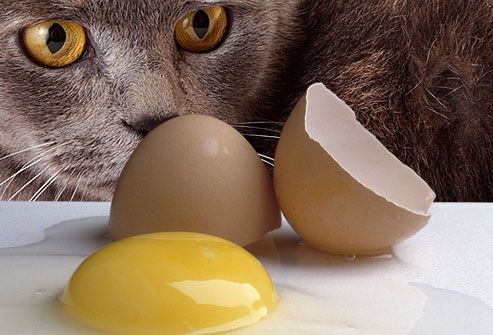
Raw Eggs


There are two problems with giving your cat raw eggs. The first is the possibility of food poisoning from bacteria like Salmonella or E. coli. The second is that an enzyme in raw eggs, avidin, interferes with the absorption of the B vitamin biotin.

This can cause skin problems as well as problems with your cat's coat.


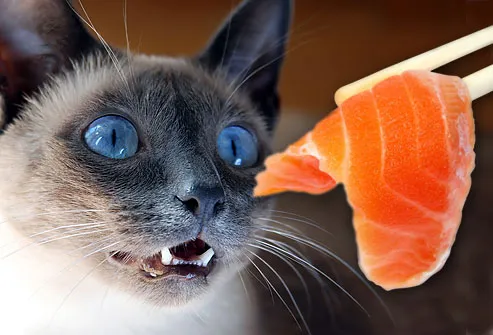
Raw Meat and Fish


Raw meat and raw fish, like raw eggs, can contain bacteria that cause food poisoning. In addition, an enzyme in raw fish destroys thiamine, which is an essential B vitamin for your cat. A lack of thiamine can cause serious neurological problems and lead to convulsions and coma.


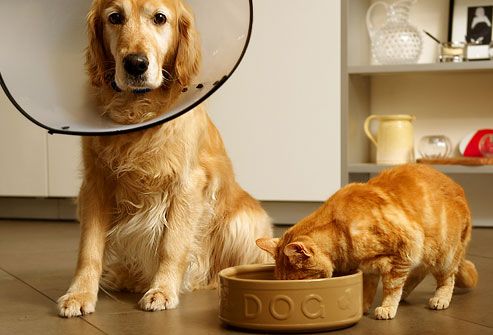
Dog Food


An occasional bite of dog food won't hurt your cat. But dog food is not a substitute for cat food. They do have many of the same ingredients. But cat food is specially formulated for a cat's needs, which include more protein as well as certain vitamins and fatty acids. A steady diet of dog food can cause your cat to be severely malnourished.


Liver


Liver can be healthy for a cat if the cat doesn't get too much. But eating too much liver can cause vitamin A toxicity. This is a serious condition that can affect your cat's bones. Symptoms include deformed bones, bone growths on the elbows and spine, and osteoporosis. Vitamin A toxicity can also cause death.


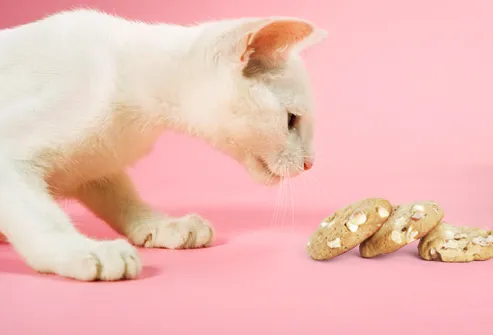
Sugary Foods and Drinks


Too much sugar can do the same thing to cats that it does to humans. It can lead to obesity, dental problems, and even diabetes.


Yeast Dough


Before it's baked, bread dough needs to rise. And, that's exactly what it would do in your cat's stomach if your cat ate it. As it swells inside, the dough can stretch the abdomen and cause severe pain. In addition, when the yeast ferments the dough to make it rise, it produces alcohol that can lead to alcohol poisoning.


Your Medicine


Reacting to a drug commonly prescribed for humans is one of the most common causes of poisoning in cats. Just as you would do for your children, put all medicines where your cat can't get to them. And, never give your cat any over-the-counter medicine unless advised to do so by your vet. Ingredients such as acetaminophen or ibuprofen are common in pain relievers and cold medicine. And, they can be deadly for your cat.


Kitchen Pantry: No Cats Allowed


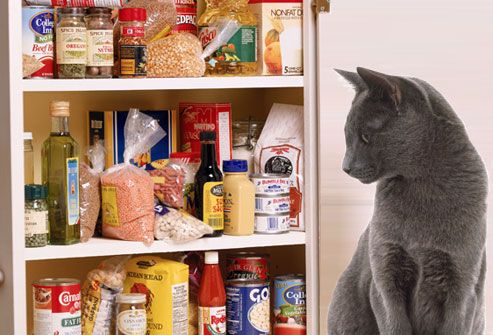
Many other items commonly found on kitchen shelves can harm your cat. For instance, baking powder and baking soda are both highly toxic. So are nutmeg and other spices. Keeping food items where your cat can't get to them and keeping pantry and cupboard doors closed will help protect your cat from serious food-related illness.


If Your Cat Eats What It Shouldn't


No matter how cautious you are, it's possible your cat can find and swallow what it shouldn't. It's a smart idea to always keep the number of your local vet, the closest emergency clinic, and the ASPCA Animal Poison Control Center -- (888) 426-4435 -- where you know you can find it in an emergency. And, if you think your cat has consumed something that's toxic, call for emergency help at once.


What Cats Can Eat


Cats are carnivores, and need meat. Talking with your vet about the cat food you provide and following the directions on the label will help ensure your cat's diet is balanced and your cat stays healthy. An occasional taste of cooked boneless beef or brown rice can be an OK treat. But it's best to keep it small and infrequent.

  • Digg
  • Del.icio.us
  • StumbleUpon
  • Reddit
  • RSS

Slideshow: Foods Your Cat Should Never Eat

0 nhận xét

Dangerous Foods?


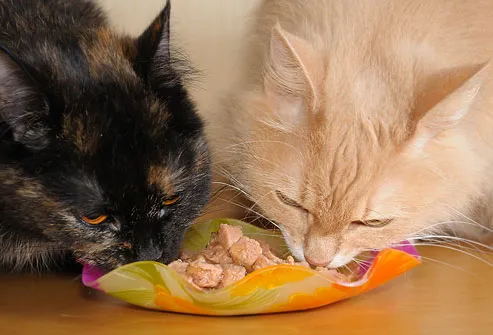
Because they're such picky eaters, we sometimes think cats know what’s best for them when it's time to eat. But the fact they'll walk away from a piece of bad meat doesn't mean they'll bypass an open can of tuna. And, that can of tuna can be just as dangerous. In fact, you may be surprised to learn some of the common foods your cats should never eat.


Tuna


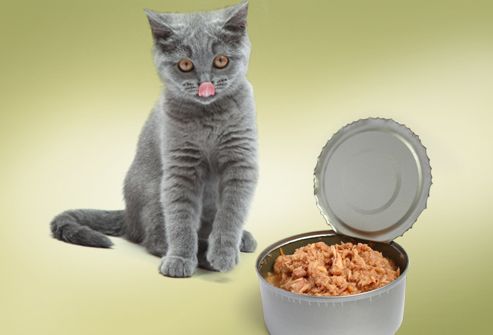
Cats can be addicted to tuna, whether it's packed for cats or for humans. Some tuna now and then probably won't hurt. But a steady diet of tuna prepared for humans can lead to malnutrition because it won't have all the nutrients a cat needs. And, too much tuna can cause mercury poisoning. Remember the saying, "Honest as a cat when the meat’s out of reach." Your cat will see an open can of tuna next to the sink as a dinner invitation.


Onions, Garlic, Chives


Onion in all forms - powdered, raw, cooked, or dehydrated - can break down a cat's red blood cells, leading to anemia. That's true even for the onion powder that's found in some baby foods. An occasional small dose probably won’t hurt. But eating a large quantity once or eating smaller amounts regularly can cause onion poisoning. Along with onions, garlic and chives can cause gastrointestinal upset.


Milk and Other Dairy Products


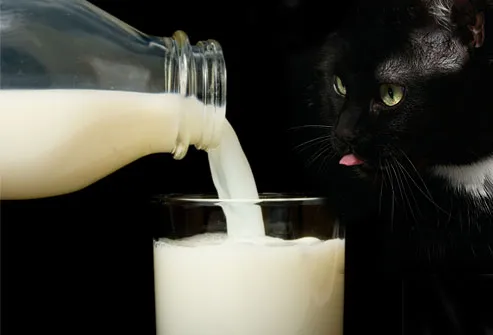
What could be wrong with offering your cat a saucer of milk, or a piece of cheese? Although kittens, with their undeveloped digestive system, are able to tolerate milk, most adult cats cannot. Their digestive system is simply not designed to process rich dairy foods, and the result can be digestive upset, and can lead to food allergies (which often manifest as itchiness).


Alcohol


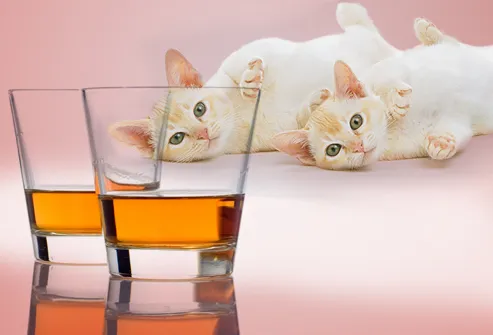
Beer, liquor, wine, foods containing alcohol -- none of it is good for your cat. That's because alcohol has the same effect on a cat's liver and brain that it has on humans. But it takes far less to do its damage. Just two teaspoons of whisky can cause a coma in a 5-pound cat, and one more teaspoon could kill it. The higher the proof, the worse the symptoms.


Grapes and Raisins


Grapes and raisins have often been used as treats for pets. But it's not a good idea. Although it isn't clear why, grapes and raisins can cause kidney failure in cats. And, a small amount can make a cat ill. Repeated vomiting and hyperactivity are early signs. Although some cats show no ill effects, it's best not to give your cat any grapes and to keep grapes and raisins off countertops and other places accessible to your cat.


Coffee, Tea, and Other Caffeine


Caffeine in large enough quantities can be fatal for a cat. And, there is no antidote. Symptoms of caffeine poisoning include restlessness, rapid breathing, heart palpitations, muscle tremors, fits, and bleeding. In addition to tea and coffee -- including beans and grounds -- caffeine can be found in cocoa, chocolate, colas, and stimulant drinks such as Red Bull. It's also in some cold medicines and pain killers.


Chocolate


Chocolate can be lethal for cats. Although most cats won't eat it on their own, they can be coaxed to eat it by owners and others who think they are giving the cat a treat. The toxic agent in chocolate is theobromine. It's in all kinds of chocolate, even white chocolate. The most dangerous kinds, though, are dark chocolate and unsweetened baking chocolate. Eating chocolate can cause abnormal heart rhythm, tremors, seizures, and death.


Candy and Gum


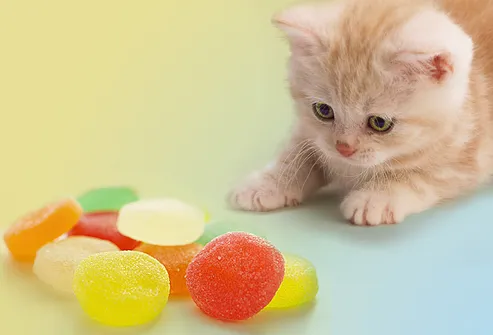
Candy, gum, toothpaste, baked goods, and some diet foods are sweetened with xylitol. Xylitol can cause an increase in the insulin circulating through your cat's body. That can cause the cat's blood sugar to drop and lead to liver failure. Initial symptoms include vomiting, lethargy, and loss of coordination. Eventually, the cat may have seizures, and liver failure can occur within just a few days.


Fat Trimmings and Bones


Table scraps often contain fat trimmed off of meat and bones. Both are dangerous for cats. Fat trimmed from meat, both cooked and uncooked, can cause pancreatitis. And, a cat can choke on a bone. Bones can also splinter and cause an obstruction or lacerations of your cat's digestive system.

  • Digg
  • Del.icio.us
  • StumbleUpon
  • Reddit
  • RSS

How to Put Your Cat on a Diet

0 nhận xét
More than half -- 57% -- of U.S. cats are overweight or obese, according to a 2008 study by the Association for Pet Obesity Prevention. That’s 51 million fat cats.

How can you tell if your cat is overweight? And what can you do about it? WebMD asked Tony Buffington, DVM, PhD, an expert in feline health and nutrition.

Q: How can I tell if my cat is too fat?

A: You do a body condition score. Look down at your cat. You should be able to see a waist when you look down on it from the top, or when you run your hands from its ribs to its hips. Run your hand along its abdomen from its ribs to its pelvis and it should be indented.

If you put your hands on the side of its chest, you should be able to feel its ribs without a thick layer of fat over them. There are charts that show this. You can find them online - all the pet food sites have body condition scoring charts. Or ask at your veterinarian’s office and they can show you the chart and help you evaluate where your cat falls.

Q: Are some breeds more prone to weight gain?

A: A couple of studies have looked at this, and surprisingly, they found that mixed breed cats are about twice as likely to be overweight than purebred cats.

Q: Why should I care if my cat is fat? He looks happy to me.

A: It depends on why your cat is overweight. If he’s overweight because he eats too much, or you feed him too much, then there are the common beliefs that obesity can lead to shorter life spans, diabetes, or joint and skin problems.

But often, cats are overweight because of environmental causes. So first we need to figure out why your cat is overweight. Is he not moving enough because he’s terrified in your house? Do the dog or the kids attack him every time he comes out of hiding? Or, is he bored because there’s nothing to do in the house so he just sits around and eats? If that’s the case, then changing his diet or the amount of food he eats won’t help his weight problem. He’s not a happy fat cat. He’s just fat. So the issue then is making your home a happier place for your cat. If he’s happier and more active, then he’ll probably lose weight.

That’s why, when I work with fat cats, I look at the environment as well as the food intake.

Q: Will spaying or neutering a cat make it gain weight?

A: Studies that have been done on this topic suggest that spaying or neutering a cat can cause a change in the cat’s body weight of zero to 25%. Removal of the hormones will change its metabolism a little bit and it will change its activity level a little bit. So my advice to owners is to be careful and pay attention. This is the time to keep checking that body condition score we previously talked about. Or, if you have a scale, weigh your cat regularly. And if he starts gaining weight, we might need to cut back his food intake, or switch his diet.

Q: What kind of diet should my cat be on to lose weight?

A: If we want a cat to lose weight, we have to do two things. We have to think about what we feed him and we have to figure out how to make him more active. One easy way to do both is to feed out of a foraging device. These are small plastic containers with holes that we put the cat’s food in. The cat then has to play with the device to get the food to fall out. Cats will work for food, which a lot of owners don’t realize.

But remember, we never want to change an animal’s diet without asking their permission. And the way we ask permission is offer the new food or new feeding device alongside the old dish or food.

Owners also need to know that the food intake recommendations on pet food packaging labels are generally well above what most pets need to consume. Those recommendations were developed for intact, active animals, while most of the animals I see are sedentary, spayed or neutered pets.

Q: I tried putting my cat on a diet and he howled for days. Are some cats just too old or set in their ways to change?

A: When trying to change a pet’s food, never take away the old food completely. For many cats, the old dish and food are actually a safety signal. Cats like familiarity. They don’t like a lot of change. So if you need to offer a new food, offer it alongside the old food. Give your cat a choice. Usually, when it’s done that way, the cat will at least try the other food eventually, and if he likes it, he’ll eat it.

Q: My cat is an indoor only cat. Can he get enough exercise inside to lose weight?

A: Of course he can get enough exercise if you’re providing him an enriched environment. So give your cat climbing structures because cats love to be elevated. They need windows they can look out. Use foraging balls to encourage exercise. And they need to feel comfortable enough to come out. If they’re afraid of half the things in your house, they won’t come out to exercise.

And that includes people. Remember, you should never use punishment as a teaching tool. If you slap a cat, he thinks you’re trying to kill him. He can become immobilized with fear. But cats respond marvelously to praise and treats.

Q: Does my cat need to see a vet before starting an exercise plan or a diet?

A: It’s a good idea just to be sure there’s not something else going on. There are probably a dozen different causes of obesity in cats, ranging from overeating and overfeeding to inadequate activity, seasonal obesity, and even some drugs and diseases can cause weight gain.

I’d also like the vet to do an environmental history to make sure the cat isn’t fat just because it’s afraid to move - the dog is bothering it or the kids are pulling its tail every time it comes out. That’s actually fairly common. Owners need to know if their cat hides a lot, that’s not normal cat behavior. So we need to help them find a way to structure the home life so the cat is moving around and interacting with its environment.

Q: Should I cook for my cat?

A: You can, but I don’t recommend it. It takes a lot of time and you have to include supplements. If you want to do this, you really should talk to your veterinarian to be sure you’re doing it correctly. There are places that will sell you the supplements and then you can just add in the protein and carbohydrates, if you have the time and the interest.

Q: Are there any diet pills for cats?

A: No. They have one for dogs, but that medication is dangerous for cats.
Reviewed on May 01, 2010

© 2009 WebMD, LLC. All rights reserved.
  • Digg
  • Del.icio.us
  • StumbleUpon
  • Reddit
  • RSS

Yes, You Can Exercise Your Cat

0 nhận xét
How to get overweight or obese cats back in shape.

An estimated 57% of U.S. cats are overweight or obese, according to a 2008 study by the Association for Pet Obesity Prevention.

So WebMD asked Rolan Tripp, DVM, for advice on how to get fat cats back in shape. Tripp is an affiliate professor of applied animal behavior at Colorado State University veterinary school and the University of Wisconsin veterinary school, and founder of animalbehavior.net.

Q: Why are so many of our cats fat?

A: Because they’re over fed and under exercised. There’s no magic here. The pet food companies make their foods the tastiest they can make it. And then there’s the misconception that when a cat isn’t eating it’s somehow sick. That’s not always the case.

Q: My cat has the run of the house, isn’t that enough exercise?

A: No. Could you get all the exercise you need just walking around your house? An indoor cat needs planned exercise. The best exercise is object play - playing with your cat with toys. That’s the answer to exercise problems, obesity, and how to get a well-adjusted cat. If your cat doesn’t get enough exercise, it comes out in bad ways.

Q: If I get another cat, will they get more exercise?

A: If it’s a kitten. Kittens are the high-energy ones. If it’s another adult cat, you have to be very careful. Bringing another adult cat into the house has very few positives for the established cat. What you need to do when you bring home another cat is buy a bunch of new resources - new toys, new food, new beds, new treats. So the association for your old cat is that this new cat comes in with a bounty, a dowry.

Q: What are some games I can play with my cat to get him moving?

A: Cats are predators, and the way to get them to play is to let them use their hunting talents. Buy toys and then use them to mimic the actions of the animals a cat would normally hunt - a mouse, bird, lizard, rabbit or bug. Take a laser pointer and skitter it across the floor like a bug. Get a wand toy that looks like a bird and pretend to land and take off. But don’t just flap it around. No bird acts like that. Try to think about what a bird really does and then reenact that with the toy. It’s all pretend play, but try to make it as real as possible for your cat.

Q: Do cats like videos showing birds, squirrels, and other animals? Should I get them a fish tank or put up a birdfeeder outside a window that they can watch?

A: Some might like the videos, but I don’t personally know of any. I think those videos are really more for people who have guilt because they’re gone all day at work. But dragging a piece of string around for a little while when they get home is too much work, so they’d rather buy a video.

Now fish tanks are great. And cats love watching birds outside a window. I don’t recommend birds inside a house with cats, because birds are very intelligent and know they are being stalked. But a birdfeeder outside a window that cats can watch is a great idea.

Q: Can you train a cat to walk on a leash?

A: Yes, but they don’t get a lot of exercise from it because they’re too busy sniffing around and checking things out. The main reason to walk your cat on a leash is to safely give them some time outdoors when they can’t run away. It’s more mental exercise than physical exercise.

Q: My cat doesn’t like toys, or gets bored with them quickly. What can I do?

A: Toys for cats to play with by themselves have marginal interest. You’ve got this ball on a spring. The cat bops it a few times, it goes up and down, and the cat says “OK, now what?”

Cats do want toys, but the toys should be “prey play” oriented. In the wild, a cat will only stalk prey for about three to five minutes. After that, he’ll give up and go search somewhere else. So don’t try to play longer than the genetic capacity of the cat.

When he’s beginning to lose interest, change to another game. Now, some cats will really like bird and they’ll play that longer than other games. Some might really like the bug. Fine. It doesn’t have to be equal time.

Also, let them win occasionally. Put a tasty treat under the toy and let them pounce on it, eat it, and win.

I also believe if a kitten between 7 weeks and 12 weeks is given a lot of toys to play with, it will probably be more likely to play with toys when it gets older, although that’s just my opinion. Two great cat toys are ping pong balls, because they’re light and they go a long way if you whack them, and walnuts, because they make a little crackly sound, like a mouse scurrying away, and they roll irregularly, like a mouse would run.

A really good game is bathtub hockey. Give a kitten a ping pong ball in the bathtub and just watch what happens.

Q: How long should our play periods last, and how often should I have them?

A: As often as the cat will play, because a tired cat is a well behaved cat. But at least a couple times a day. And the best time to play is right before bed, so you can tire them out.

Q: Can cats learn tricks like a dog?

A: They’re not genetically very well equipped for this. Dogs are pack animals, and they’re always looking at their counterparts, seeing what they’re doing, and then changing their behavior based on what the other dogs in the pack do.

Cats, on the other hand, hunt on their own. If another cat comes around, they pay attention only long enough to drive them away. They’re not taking their cues from other cats. That doesn’t mean we can’t train cats to do things. They can learn simple, basic things. But it takes a lot longer than it does to train a dog to do a trick.
  • Digg
  • Del.icio.us
  • StumbleUpon
  • Reddit
  • RSS

Caution Urged in Use of Flea, Tick Products for Pets

0 nhận xét
Environmental Protection Agency Reacts to Reports of Health Problems in Pets

March 18, 2010 -- In the wake of mounting reports of adverse pet health effects, the Environmental Protection Agency (EPA) has issued new restrictions on spot-on flea and tick products -- and urges extra care in their use.

The products are concentrated pesticides applied from a small tube to the skin beneath the fur on a cat or dog's back. They can keep a treated pet free of fleas and ticks for weeks. Popular brands include Advantage, Bio-Spot, Frontline, Hartz, and Zodiac.

The EPA, which is responsible for pesticide safety, noted an increase in the number of safety reports on these products. In 2009, the agency asked eight manufacturers for detailed information from adverse-event reports on their products.

Those details linked the products to health issues ranging from mild skin irritation to seizures and, in rare cases, to the death of the pet. Because the reports did not account for product popularity -- and because the reports were not verified -- the EPA was not able to identify if any specific products were particularly dangerous.

EPA Actions


Nevertheless, the EPA has announced it is taking several actions:

  • Product misuse, such as using doses intended for large dogs on small dogs, led to many of the negative health incidents. New product labels must carry clearer, more precise instructions.

  • A number of incidents were caused by consumers using dog products on cats. New product labeling requirements will prevent the use of similar names for cat and dog products and require a clear indication of which products are formulated for dogs or cats.

  • New products will receive only conditional approval to allow for post-marketing surveillance.

  • Some of the products' safety issues may be related to inert ingredients. The EPA will investigate these ingredients and restrict their use if necessary.

  • Pre- and post-marketing tests will be required to bring these products into line with regulations required by the FDA for similar products.

  • The EPA is launching a consumer information campaign to educate pet owners about the appropriate use of these products.


The EPA lists eight firms making the products:

  • Bayer (Advantage brands)

  • Fort Dodge (owned by Pfizer, brands include ProMeris for Cats)

  • Hartz Mountain (brands include Control One-Spot)

  • Merial (Frontline brands)

  • Pet Logic

  • Sergeants (brands include Sergeant's and Sentry)

  • Summit Vetpharm (Vectra brands)

  • Wellmark/Farnam (now Central Life Sciences, brands include Bio-Spot and Zodiac)


All of the products were linked to some reports of deaths and other serious events, but the most of the incidents were not serious.

In dogs, the EPA found that:

  • Most of the adverse events involved the dog's skin, gastrointestinal system, or nervous system.

  • Symptoms included vomiting, diarrhea, salivating, itching, hair loss, skin ulcers, lethargy, nervousness, loss of muscle coordination, tremors, and seizure.

  • Small-breed dogs were more likely to be affected. Most incidents were in dogs weighing 10 to 20 pounds.

  • Most incidents were in dogs less than 3 years old.


In cats, the EPA found that:

  • Most of the adverse events involved the cat's skin, gastrointestinal system, or nervous system.

  • Clinical symptoms were similar to those seen in dogs.

  • Many incidents arose from the treatment of cats with products intended for dogs.


Manufacturers' Reaction


WebMD asked each manufacturer to comment on the EPA action. All of those who responded expressed a willingness to work with the EPA to continue to make these products safer.

Mark Newberg, director of corporate affairs for Central Life Sciences, noted that the vast majority of people who use his firm's and other firms' products have no problem at all.

"If you look at the fact that 270 million doses of product [from all companies] were sold, and a rate of 16 incidents per 10,000, it means you have millions of dogs and cats protected from flea allergy dermatitis, tapeworm, and other diseases," Newberg tells WebMD. "These are satisfied customers. But on occasion there are adverse incidents we can't predict."

Bob Walker, director of communications and public policy for Bayer Animal Health, noted that of the 16 incidents per 10,000 doses, few were serious.

"We have done a thorough analysis of our own incident reporting, and Bayer did not see an increase for Advantage over the period cited by the EPA," Walker tells WebMD. "And our rate of adverse incidents is lower than the aggregate rate reported by the EPA."

In a statement provided to WebMD, Hartz Mountain expressed a willingness to work with the EPA on making labeling clearer.

"While Hartz is the leader in flea and tick retail sales, Hartz flea and tick drops account for less than five percent of all adverse effects reported to the EPA in 2008 for topical dog and cat flea and tick treatment," the statement says.

Merial also provided a statement to WebMD.

"Although EPA has said that its initiative was prompted by a 'sharp increase' it had noted in 2007-2008 in the number of reported adverse events related to the use of spot-on flea and tick control products in general, Merial's data does not indicate that this is the case for Frontline. The number of adverse events reported for Frontline has remained consistently low since the product's introduction in 1996," the statement says.

Source WebMD
  • Digg
  • Del.icio.us
  • StumbleUpon
  • Reddit
  • RSS
 
Copyright © Pet Health Center