Hiển thị các bài đăng có nhãn Cat Food. Hiển thị tất cả bài đăng

Thứ Bảy, 1 tháng 1, 2011

Cat Nutrition

0 nhận xét
What is good nutrition, and why is it so important? Nutrition is the process of using or transforming food into living tissue. Cat nutrition is very important for a cat because poor health of a cat may lead to serious diseases and may lead to respiratory problems as well.

If not provided a complete and balanced diet, your cat will not grow properly, reproduce, maintain the health of all its body tissues, or fight infection.

Your cat's hunt for a complete and balanced daily food intake is now easier than its ancestor's hunt for thousands of years ago; thanks to commercial pet foods as they provide a complete healthy diet for a cat. The sound of the can opener or the jumbling of the dry food in the box will awaken the beast inside your cat - it will run from the comfy carpet near the fire-place to the kitchen to devour its neatly packaged and completely nutritious "prey".

Your cat's ancestors had to go for "shopping" in search for cat nutrition. The game they caught provided every-thing: protein from muscle tissue; fats, vitamins, and minerals from organs and bones; carbohydrates extracted from the vegetable and cereal matter left in the game's digestive tract. Vegetables and cereal starches aren't required by cats, but they do provide calories in bulk.
  • Digg
  • Del.icio.us
  • StumbleUpon
  • Reddit
  • RSS

Thứ Hai, 6 tháng 12, 2010

Cat Nutrition

0 nhận xét
What is good nutrition, and why is it so important? Nutrition is the process of using or transforming food into living tissue. Cat nutrition is very important for a cat because poor health of a cat may lead to serious diseases and may lead to respiratory problems as well.


If not provided a complete and balanced diet, your cat will not grow properly, reproduce, maintain the health of all its body tissues, or fight infection.

Your cat's hunt for a complete and balanced daily food intake is now easier than its ancestor's hunt for thousands of years ago; thanks to commercial pet foods as they provide a complete healthy diet for a cat. The sound of the can opener or the jumbling of the dry food in the box will awaken the beast inside your cat - it will run from the comfy carpet near the fire-place to the kitchen to devour its neatly packaged and completely nutritious "prey".

Your cat's ancestors had to go for "shopping" in search for cat nutrition. The game they caught provided every-thing: protein from muscle tissue; fats, vitamins, and minerals from organs and bones; carbohydrates extracted from the vegetable and cereal matter left in the game's digestive tract. Vegetables and cereal starches aren't required by cats, but they do provide calories in bulk.

Years of research and development by the major pet-food companies have produced complete and balanced foods for your modern cat. These products, 'filch are excellent from weaning to old age, eliminate the need for home made that are time-consuming and expensive to prepare and may lack important nutritional requirements.

The following discussion will focus on

  1. The composition of food,

  2. The types of pet foods,

  3. How much to feed at different stages of cat's life,

  4. The advantages and disadvantages of each type of commercial pet food.


What is the right food for cat? Why there is a requirement for choosing right composition of food. Right food helps the cat to grow healthy and wise and to face their maternity period strongly and healthily. And also to fight against infection, diseases, etc.

In the balanced diet for a cat there should be natural raw materials which are natural solution to remain healthy. The food can be either dry or canned for a cat. Both of these foods have their own pros and cons as discussed below.

Dry food is crunchy and is available in various flavors, colors, different sizes and shapes which a cat may like to have. It is easy to store it; it should not remain open for a long time as it can come in contact with moisture. Dry food is good for the teeth's of a cat as it helps them to get stronger. But it doesn't provide sufficient water to their body. Due to this reason their body may get affected by lack of water. Dry food is still considered as good nutritious food for a cat overall as it provides sufficient nutrition to their body.

Some cats are fond of moist food which is known as canned food. Canned food has its own benefits as the canned food is moist and rich in water. It increases the water intake in the body of a cat. We can leave canned food outside for a long time also, but once we have opened a canned food we have to keep it in cool place like refrigerator as it can get spoiled. It is good food for cats and is complete cat nutrition.

Best food for cats can be dry or canned as already discussed above. There can be some more category of food like it can be premium, or it can be super-premium. Any of this food can be a perfect cat's balanced diet.
  • Digg
  • Del.icio.us
  • StumbleUpon
  • Reddit
  • RSS

Thứ Hai, 4 tháng 10, 2010

Carbohydrates in Cat Foods

0 nhận xét
Carbohydrates are present in almost all commercially available cat foods. While we often focus on the protein and fat content of a cat food, carbohydrates have an impact on the quality of your cat's diet. Carbohydrates are responsible for many health problems, if not fed correctly. This article will focus primarily on the non-fiber carbohydrates. There is a separate article that discusses fiber in greater detail.

The function of carbohydrates in pet food

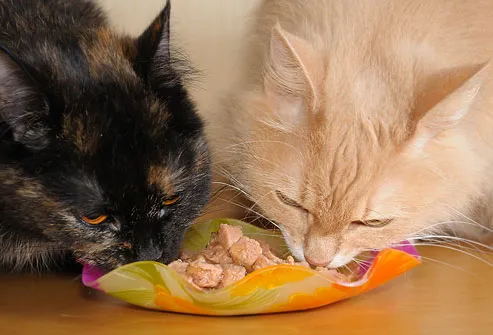
cat eating from dishThe value of carbohydrates in cat foods is often debated among nutritionists. Despite the debate, most commercial dry foods contain between 30% and 70% carbohydrates. If we examine the diets of the wild felines that most closely resemble our domestic pets, we recognize that the wild felines do eat some carbohydrates through the consumption of the intestinal contents of their prey. However, the carbohydrate intake would be less than 5%. This then raises the question as to why we feed our domestic pets so much carbohydrate, when it appears to be an unnatural food source.

Cats have the ability to consume large quantities of protein and then convert that protein into energy in addition to muscle. They also have the ability to convert many carbohydrate sources into the same kind of energy. This ability to utilize both carbohydrates and proteins as an energy source explains how we are able to feed our pets a carbohydrates in the diet, particularly when we feed processed carbohydrates that are easily digested. While cats are similar to dogs in their ability to utilize some carbohydrates, cats need a much higher level of protein and fat to remain healthy. So, essentially we are meeting the cat's protein requirement with meat, and then meeting their energy and fiber requirements with carbohydrates instead of the protein they would often use in the wild.

  • Digg
  • Del.icio.us
  • StumbleUpon
  • Reddit
  • RSS

Thứ Năm, 5 tháng 8, 2010

Foods Your Cat Should Never Eat

0 nhận xét

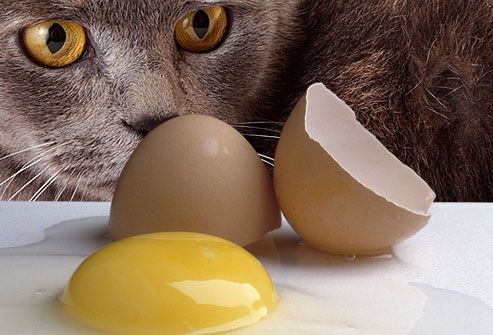
Raw Eggs


There are two problems with giving your cat raw eggs. The first is the possibility of food poisoning from bacteria like Salmonella or E. coli. The second is that an enzyme in raw eggs, avidin, interferes with the absorption of the B vitamin biotin.

This can cause skin problems as well as problems with your cat's coat.


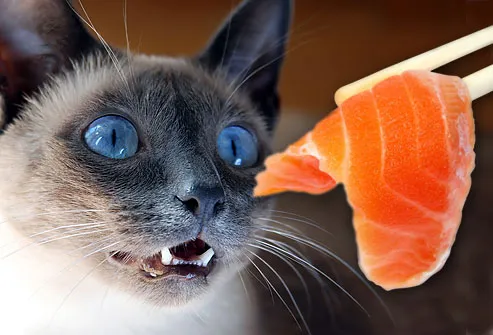
Raw Meat and Fish


Raw meat and raw fish, like raw eggs, can contain bacteria that cause food poisoning. In addition, an enzyme in raw fish destroys thiamine, which is an essential B vitamin for your cat. A lack of thiamine can cause serious neurological problems and lead to convulsions and coma.


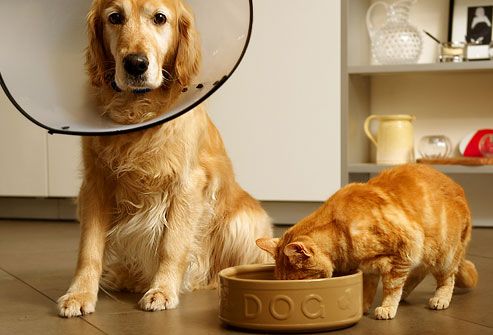
Dog Food


An occasional bite of dog food won't hurt your cat. But dog food is not a substitute for cat food. They do have many of the same ingredients. But cat food is specially formulated for a cat's needs, which include more protein as well as certain vitamins and fatty acids. A steady diet of dog food can cause your cat to be severely malnourished.


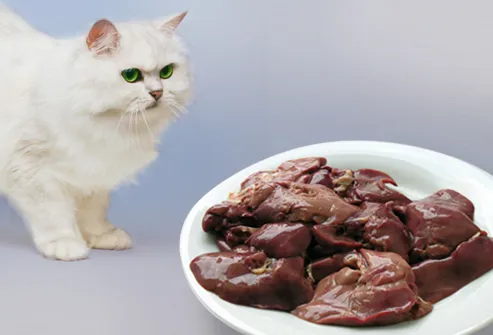
Liver


Liver can be healthy for a cat if the cat doesn't get too much. But eating too much liver can cause vitamin A toxicity. This is a serious condition that can affect your cat's bones. Symptoms include deformed bones, bone growths on the elbows and spine, and osteoporosis. Vitamin A toxicity can also cause death.


Sugary Foods and Drinks


Too much sugar can do the same thing to cats that it does to humans. It can lead to obesity, dental problems, and even diabetes.


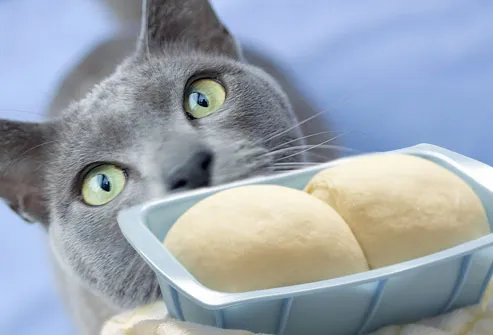
Yeast Dough


Before it's baked, bread dough needs to rise. And, that's exactly what it would do in your cat's stomach if your cat ate it. As it swells inside, the dough can stretch the abdomen and cause severe pain. In addition, when the yeast ferments the dough to make it rise, it produces alcohol that can lead to alcohol poisoning.


Your Medicine


Reacting to a drug commonly prescribed for humans is one of the most common causes of poisoning in cats. Just as you would do for your children, put all medicines where your cat can't get to them. And, never give your cat any over-the-counter medicine unless advised to do so by your vet. Ingredients such as acetaminophen or ibuprofen are common in pain relievers and cold medicine. And, they can be deadly for your cat.


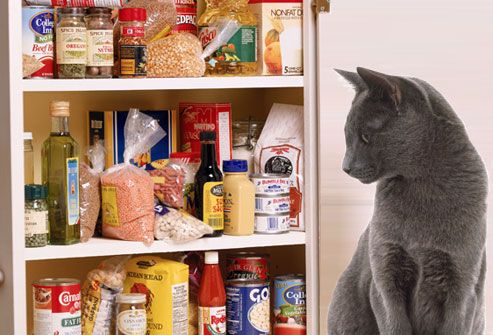
Kitchen Pantry: No Cats Allowed


Many other items commonly found on kitchen shelves can harm your cat. For instance, baking powder and baking soda are both highly toxic. So are nutmeg and other spices. Keeping food items where your cat can't get to them and keeping pantry and cupboard doors closed will help protect your cat from serious food-related illness.


If Your Cat Eats What It Shouldn't


No matter how cautious you are, it's possible your cat can find and swallow what it shouldn't. It's a smart idea to always keep the number of your local vet, the closest emergency clinic, and the ASPCA Animal Poison Control Center -- (888) 426-4435 -- where you know you can find it in an emergency. And, if you think your cat has consumed something that's toxic, call for emergency help at once.


What Cats Can Eat


Cats are carnivores, and need meat. Talking with your vet about the cat food you provide and following the directions on the label will help ensure your cat's diet is balanced and your cat stays healthy. An occasional taste of cooked boneless beef or brown rice can be an OK treat. But it's best to keep it small and infrequent.

  • Digg
  • Del.icio.us
  • StumbleUpon
  • Reddit
  • RSS

Slideshow: Foods Your Cat Should Never Eat

0 nhận xét

Dangerous Foods?


Because they're such picky eaters, we sometimes think cats know what’s best for them when it's time to eat. But the fact they'll walk away from a piece of bad meat doesn't mean they'll bypass an open can of tuna. And, that can of tuna can be just as dangerous. In fact, you may be surprised to learn some of the common foods your cats should never eat.


Tuna


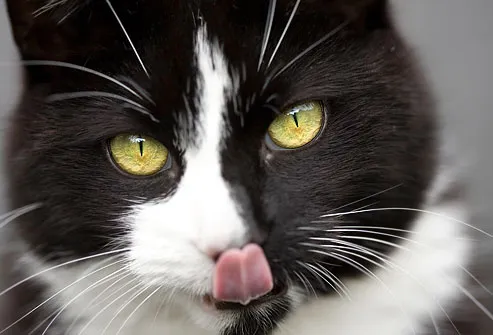
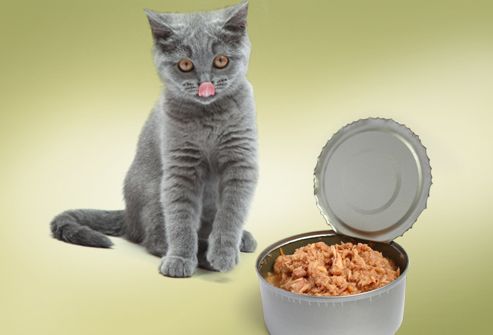
Cats can be addicted to tuna, whether it's packed for cats or for humans. Some tuna now and then probably won't hurt. But a steady diet of tuna prepared for humans can lead to malnutrition because it won't have all the nutrients a cat needs. And, too much tuna can cause mercury poisoning. Remember the saying, "Honest as a cat when the meat’s out of reach." Your cat will see an open can of tuna next to the sink as a dinner invitation.


Onions, Garlic, Chives


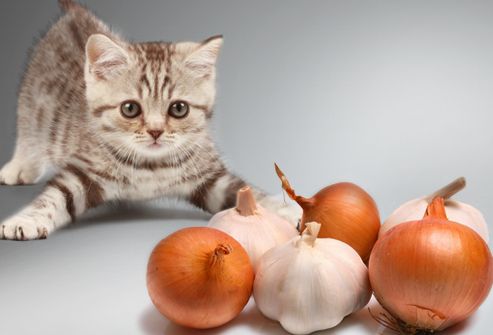
Onion in all forms - powdered, raw, cooked, or dehydrated - can break down a cat's red blood cells, leading to anemia. That's true even for the onion powder that's found in some baby foods. An occasional small dose probably won’t hurt. But eating a large quantity once or eating smaller amounts regularly can cause onion poisoning. Along with onions, garlic and chives can cause gastrointestinal upset.


Milk and Other Dairy Products


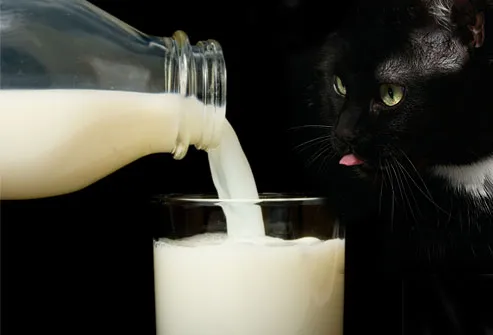
What could be wrong with offering your cat a saucer of milk, or a piece of cheese? Although kittens, with their undeveloped digestive system, are able to tolerate milk, most adult cats cannot. Their digestive system is simply not designed to process rich dairy foods, and the result can be digestive upset, and can lead to food allergies (which often manifest as itchiness).


Alcohol


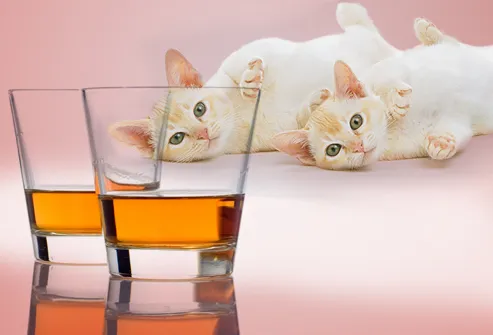
Beer, liquor, wine, foods containing alcohol -- none of it is good for your cat. That's because alcohol has the same effect on a cat's liver and brain that it has on humans. But it takes far less to do its damage. Just two teaspoons of whisky can cause a coma in a 5-pound cat, and one more teaspoon could kill it. The higher the proof, the worse the symptoms.


Grapes and Raisins


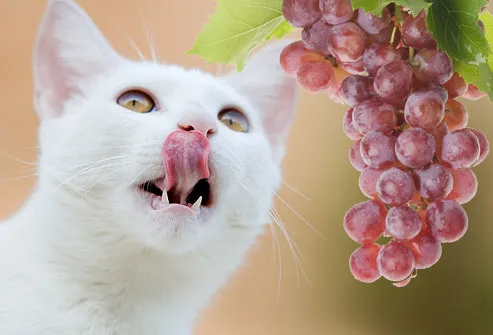
Grapes and raisins have often been used as treats for pets. But it's not a good idea. Although it isn't clear why, grapes and raisins can cause kidney failure in cats. And, a small amount can make a cat ill. Repeated vomiting and hyperactivity are early signs. Although some cats show no ill effects, it's best not to give your cat any grapes and to keep grapes and raisins off countertops and other places accessible to your cat.


Coffee, Tea, and Other Caffeine


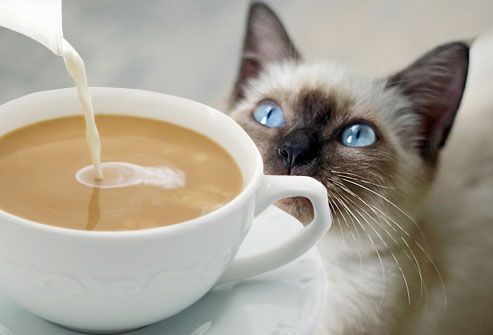
Caffeine in large enough quantities can be fatal for a cat. And, there is no antidote. Symptoms of caffeine poisoning include restlessness, rapid breathing, heart palpitations, muscle tremors, fits, and bleeding. In addition to tea and coffee -- including beans and grounds -- caffeine can be found in cocoa, chocolate, colas, and stimulant drinks such as Red Bull. It's also in some cold medicines and pain killers.


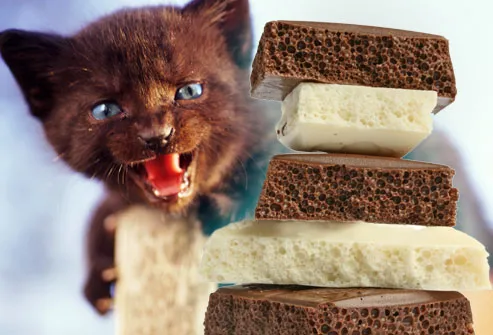
Chocolate


Chocolate can be lethal for cats. Although most cats won't eat it on their own, they can be coaxed to eat it by owners and others who think they are giving the cat a treat. The toxic agent in chocolate is theobromine. It's in all kinds of chocolate, even white chocolate. The most dangerous kinds, though, are dark chocolate and unsweetened baking chocolate. Eating chocolate can cause abnormal heart rhythm, tremors, seizures, and death.


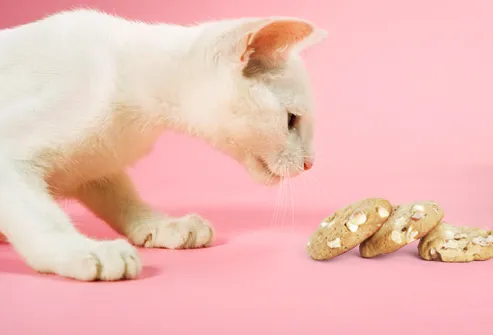
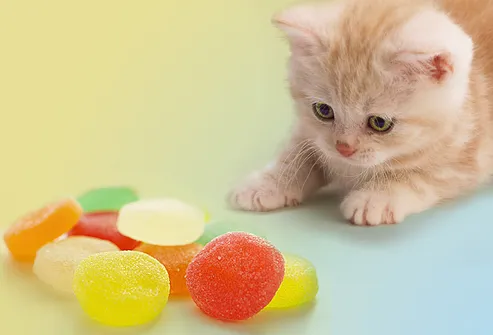
Candy and Gum


Candy, gum, toothpaste, baked goods, and some diet foods are sweetened with xylitol. Xylitol can cause an increase in the insulin circulating through your cat's body. That can cause the cat's blood sugar to drop and lead to liver failure. Initial symptoms include vomiting, lethargy, and loss of coordination. Eventually, the cat may have seizures, and liver failure can occur within just a few days.


Fat Trimmings and Bones


Table scraps often contain fat trimmed off of meat and bones. Both are dangerous for cats. Fat trimmed from meat, both cooked and uncooked, can cause pancreatitis. And, a cat can choke on a bone. Bones can also splinter and cause an obstruction or lacerations of your cat's digestive system.

  • Digg
  • Del.icio.us
  • StumbleUpon
  • Reddit
  • RSS
 
Copyright © Pet Health Center